
Learn, Pool Cues Guide
Best Carbon Fiber Pool Cues in 2026: Complete Buyer’s Guide
Carbon fiber pool cues have revolutionized the billiards world over the past decade, and 2026 marks another milestone year for this technology. Whether you’re a competitive player seeking every edge or a recreational billiard enthusiast ready to upgrade, carbon fiber shaft technology delivers consistency, power, and durability that traditional wood cues simply cannot match.
In this comprehensive buyer’s guide, we’ll break down exactly what makes carbon fiber cues superior, review the top options available today, and help you find the perfect cue for your game and budget.
Why Carbon Fiber Pool Cues Outperform Wood in 2026
Before diving into specific product recommendations, it’s worth understanding what makes carbon fiber such a game-changer in billiards equipment.
Zero Warp Guarantee
The single biggest advantage of carbon fiber is its dimensional stability. Wood warps. Period. Temperature changes, humidity fluctuations, improper storage — any of these can bend a wood shaft and ruin your game. Carbon fiber is completely immune to these environmental factors. Your cue will play the same in a dry Nevada desert tournament as it will in a humid Florida pool hall.
Consistent Deflection (Low Squirt)
Modern carbon fiber shafts are engineered with extremely low deflection — often called “squirt” in billiards terminology. When you put english on the cue ball, a low-deflection shaft allows for more predictable ball paths, making English and draw shots significantly easier to control. This is especially valuable for intermediate and advanced players working on their positional game.
Power Transfer Efficiency
Carbon fiber’s stiffness translates kinetic energy more efficiently from your stroke to the cue ball. You’ll notice more speed on break shots and better response on power draw shots. The material’s density also provides a satisfying feedback you simply don’t get with hollow or composite alternatives.
Longevity and Value
A quality carbon fiber cue shaft can last 10+ years without degradation in performance. When you factor in the cost of replacing warped wood shafts every few years, carbon fiber becomes the economical choice over the long term.
Top Carbon Fiber Pool Cues in 2026
1. Nebula 2 Pool Cue — Best Overall Carbon Fiber Cue
The Nebula 2 Pool Cue stands as our top recommendation for 2026. Nebula has made a name for itself by producing carbon fiber cues at accessible price points without sacrificing performance. The Nebula 2 features a full carbon fiber shaft with a radial pin joint for easy shaft replacement and upgrades.
Key Specifications:
- Carbon fiber shaft with ultra-low deflection
- Available in 10 stunning color variants including Jet Black, Crimson Red, Amethyst Purple, and more
- 58″ standard length, 19oz weight (customizable)
- 13mm ferrule with phenolic tip
- Linen wrap handle for superior grip
Who It’s For: Intermediate to advanced players who want professional-grade carbon fiber performance without the $400+ price tag of premium brands like Predator or Lucasi.
Performance Notes: The Nebula 2 excels at spin shots. The low-deflection carbon shaft allows you to apply maximum English with minimal adjustment, which dramatically improves position play. Break shots are notably more powerful compared to wood shaft alternatives at the same price point.
2. Rhino Carbon Fiber Break Shaft
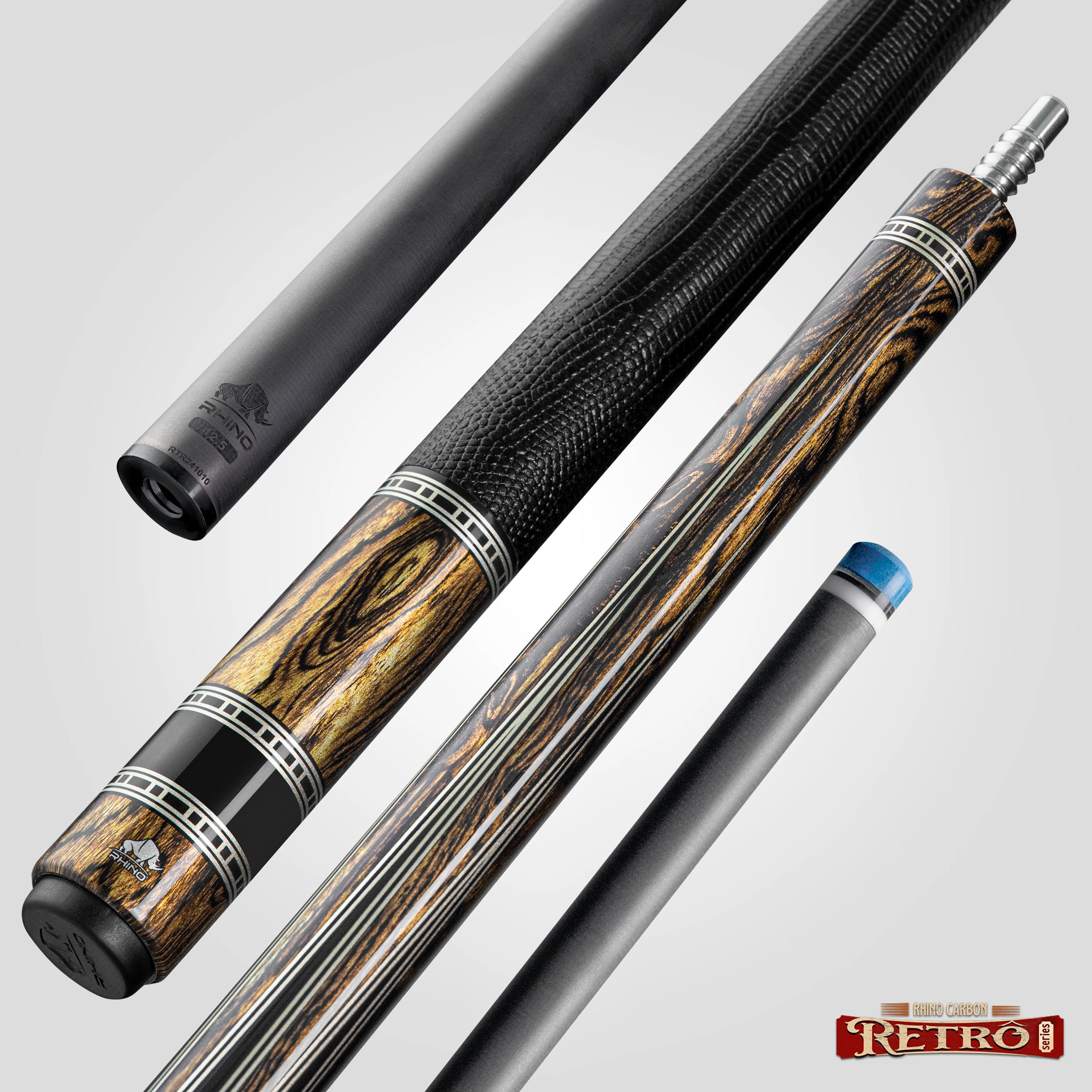
For players who want to experiment with carbon fiber before fully committing, the Rhino 30″ Carbon Fiber Break Shaft is an excellent option. This shaft fits standard joint pins and transforms your existing cue into a carbon fiber break weapon.
Key Specifications:
- 30″ carbon fiber break shaft
- Compatible with most cue joint systems
- Optimized for maximum power transfer on break shots
- Stiffer profile than playing shafts for explosive breaks
Who It’s For: Players with an existing quality wood cue who want to upgrade their break game specifically. Also excellent for players who play 9-ball or 10-ball where a devastating break is crucial.
Carbon Fiber Cue Shaft Technology Explained
Solid vs. Hollow Carbon Fiber
Not all carbon fiber shafts are created equal. True solid carbon fiber shafts provide the best performance but come at higher costs. Some budget carbon fiber cues use hollow carbon tubes with filler materials — these can work adequately but won’t provide the same feedback and power transfer as solid carbon construction.
When evaluating carbon fiber cues, ask the manufacturer whether the shaft is solid carbon or a composite construction. The Nebula 2 uses a high-quality carbon fiber construction that delivers genuine carbon fiber performance.
Ferrule Materials
The ferrule — the white piece between the shaft and tip — matters significantly for carbon fiber cues. Phenolic ferrules are standard on most carbon shafts and provide excellent energy transfer. Some premium carbon cues use carbon ferrules for a seamless energy path from shaft to tip.
Tip Hardness
Carbon fiber shafts generally pair better with medium-hard to hard tips (8-10 on the Mohs-equivalent billiard tip scale). Soft tips compress too much against the rigid carbon shaft, reducing energy efficiency. Medium tips (like Le Professional or Triangle) work well as a starting point for most players.
How to Choose the Right Carbon Fiber Cue for Your Game
For Beginners
If you’re just starting your billiards journey, a carbon fiber cue may feel very different from house cues you’ve been practicing with. The low deflection can initially feel like it’s working against you as your eyes and muscles have been trained for higher-deflection wood cues.
Recommendation: Start with the Nebula 2 in a lighter weight (18oz) to develop your stroke mechanics without fighting the cue’s weight. The consistency of carbon fiber will help you groove your stroke faster than wood.
For Intermediate Players
At the intermediate level, you’ve developed basic shot-making and want to improve your position play and English usage. This is where carbon fiber shows its biggest performance gains.
Recommendation: The Nebula 2 Jet Black at 19oz standard weight is ideal. You’ll immediately notice improved English control and more consistent power shots.
For Advanced/Competitive Players
Serious players typically know exactly what they want from their cue. Carbon fiber at this level is about maximizing consistency in tournament conditions where environment variables (temperature, humidity) can’t be controlled.
Recommendation: Pair the Nebula 2 with the Rhino Carbon Fiber Break Shaft on your break cue for a complete carbon fiber setup that handles both playing and breaking demands.
Maintenance and Care for Carbon Fiber Cues
One of carbon fiber’s greatest advantages is minimal maintenance requirements, but there are still best practices to follow:
- Tip maintenance matters most: Since the carbon shaft itself requires virtually no maintenance, focus your attention on tip condition. Chalk regularly and replace tips when they become mushroomed or lose their shape.
- Clean with a dry cloth: Wipe down the shaft after each session with a clean, dry cloth. Unlike wood, you don’t need to apply wood butter or conditioners.
- Avoid harsh cleaners: While carbon fiber is durable, avoid abrasive cleaners or solvents that could damage the finish or joint threads.
- Protect the joint: The joint pin is typically the most vulnerable part of a carbon cue. Always use a joint protector when transporting your cue.
- Storage: Store vertically in a cue case. Unlike wood, you don’t need to worry about humidity, but protecting from physical damage is still important.
Carbon Fiber vs. Wood: Making the Switch
If you’ve been playing with wood cues your entire billiards career, switching to carbon fiber requires a brief adjustment period. Most players report that within 2-4 weeks of regular play, they’ve adapted to the low-deflection characteristics and are already hitting shots they previously found difficult.
The adjustment is entirely worth it. Players who make the switch almost universally report improved consistency, better English control, and more confidence in tournament conditions. If you’re curious about the detailed comparison, read our complete carbon fiber vs. wood pool cue comparison guide.
Frequently Asked Questions (FAQ)
Are carbon fiber pool cues legal in tournaments?
Yes, carbon fiber pool cues are legal in virtually all organized billiards tournaments and leagues, including BCA (Billiard Congress of America), APA (American Poolplayers Association), and most professional tour events. The material of the shaft is not regulated — only the cue’s length, tip hardness, and other dimensional specifications matter.
Do carbon fiber cues break or crack?
Carbon fiber is significantly more durable than wood. While no cue is truly indestructible, carbon fiber shafts don’t warp, crack along the grain, or develop dead spots the way wood does. Under normal playing conditions, a quality carbon fiber shaft should last many years without performance degradation.
Why do some pros still use wood shafts?
Some professional players have spent decades mastering the feel and deflection characteristics of specific wood shafts. Switching to carbon fiber would require relearning shot aiming and English application — a significant investment during a competitive career. Many pros do use carbon fiber shafts today, and the trend toward carbon fiber in professional play continues to grow.
Can I replace just the shaft on a carbon fiber cue?
Yes, most carbon fiber cues use standard joint connections (radial pin, 5/16×14, Uni-loc, etc.) that allow shaft replacement and mixing. The Nebula 2 uses a standard radial pin joint compatible with most aftermarket shafts.
How much should I spend on a carbon fiber pool cue?
Quality carbon fiber cues start around $150-200 and go well above $500 for premium brands. The Nebula 2 offers exceptional value in the $200-300 range, delivering performance that rivals cues costing twice as much. For most recreational and intermediate players, there’s minimal practical benefit to spending above $400 on a carbon fiber cue.
Do carbon fiber cues affect cue ball control differently?
Yes, and mostly for the better. The low-deflection characteristic of carbon fiber shafts means the cue ball travels closer to where your aim point indicates, even with heavy English applied. This does require a brief adjustment period if you’re accustomed to wood shafts, but most players find their English game improves significantly after adapting.
Final Verdict: Best Carbon Fiber Pool Cues 2026
The carbon fiber cue market in 2026 offers excellent options across all price ranges. Our top recommendations remain:
- Best Overall: Nebula 2 Pool Cue — Outstanding value with genuine carbon fiber performance
- Best Break Upgrade: Rhino Carbon Fiber Break Shaft — Perfect for upgrading your break game
- Best for Style: Nebula 2 Amethyst Purple — Stunning aesthetics with full performance
Ready to make the switch to carbon fiber? Browse our complete selection of carbon fiber pool cues at Arjumany and find the perfect match for your game.