
Learn, Pool Cues Guide
Beginner’s Guide to Buying Your First Pool Cue in 2026
Buying your first pool cue is one of the most impactful decisions you can make as a developing billiards player. House cues at bars and pool halls are shared tools — bent, chipped, untipped, and inconsistent. Investing in your own cue changes everything: consistent feel, known weight, predictable tip condition, and the psychological boost of playing with equipment that belongs to you.
Why Every Billiards Beginner Needs Their Own Cue
House cues force you to compensate constantly. One cue has a flat tip, another wobbles at the joint, a third weighs three ounces more than you expect. You spend mental energy accounting for equipment variability instead of learning the game.
Your own cue gives you a consistent baseline. Every session builds muscle memory on the same tool. Your stroke adapts to one specific weight, length, and feel. Over time, the cue becomes an extension of your arm — and this is exactly what you want.
Understanding Pool Cue Specifications
Length
Standard pool cues are 58 inches long, which suits adult players from 5’5″ to 6’2″. For your first cue, start with standard 58″.
Weight
Pool cues range from 17 to 21 ounces. 19 oz is the most common starting weight. Lighter cues (17-18 oz) give more cue ball speed; heavier cues (20-21 oz) add break power. Start at 19 oz and adjust as your game develops.
Tip Diameter
Most pool cues use 12mm to 13mm tips. Larger tips (13mm) are more forgiving for beginners. The 13mm tip forgives slightly imperfect contact while still allowing spin when needed.
Shaft Material
For your first cue, choose between wood and carbon fiber. Read our full carbon fiber vs wood comparison for the complete breakdown. Both are valid for beginners. Carbon fiber removes shaft variability from your development equation, while wood gives you experience that transfers directly to house cues.
Wrap vs. Wrapless
Common wrap materials: linen (textured, absorbs sweat, best for beginners), leather (smooth, durable), Irish linen (classic look), and wrapless (direct wood contact, requires drier hands). For beginners, a linen wrap is the most forgiving choice.
Top Pool Cue Recommendations for Beginners
Best Overall First Cue: Nebula 2 Pool Cue
The Nebula 2 Pool Cue is our top recommendation for beginners ready to invest in a quality first cue. Available in 10 colors including Pure White, Emerald Green, and Blush Pink, the Nebula 2 delivers carbon fiber performance at an accessible price.
Why it works for beginners: the carbon fiber shaft is always consistent. No warp, no environmental variability. When you miss, you know it is technique — not equipment. And unlike budget cues, the Nebula 2 does not become a limiting factor as you improve.
Best Wood Cue for Beginners: Rhino VOYAGER USA Pool Cue
For players who prefer traditional wood feel, the Rhino VOYAGER USA Pool Cue is an excellent first quality wood cue. American-assembled with tight joint tolerances, the VOYAGER performs consistently — a key differentiator from budget wood cues that have loose joints and inconsistent tapers.
Best Exotic Wood Option: Rhino RETRO Wrapless Series
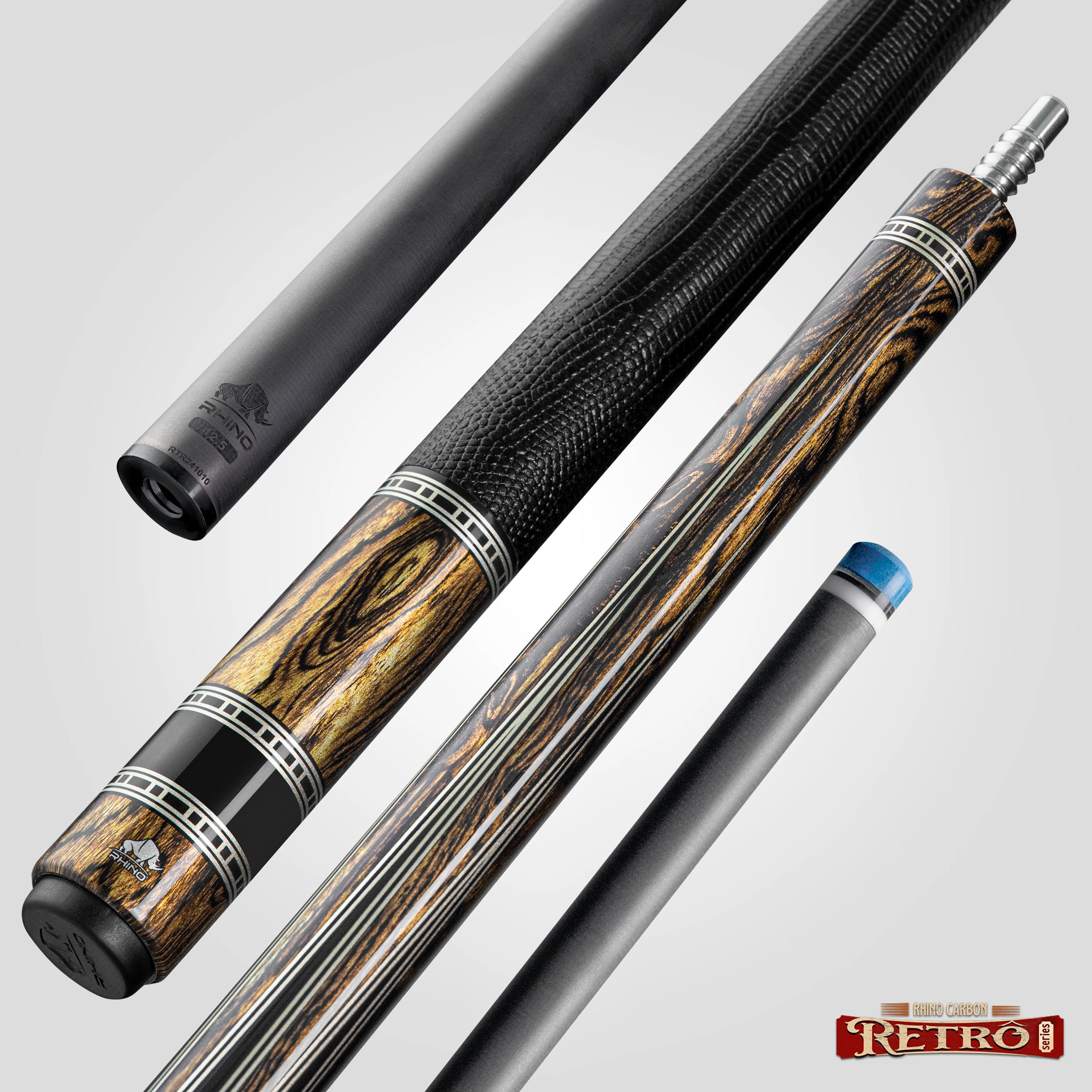
For beginners who want something they will treasure beyond their beginner years, the Rhino RETRO Thuya Wrapless or Rhino RETRO Cocobolo Wrapless are beautiful quality cues that professional players also use. The investment is higher but you are buying something that will last a decade.
What to Avoid When Buying Your First Cue
Two-piece sets under $50: Department store pool sets for $40-60 are uniformly poor quality. Loose joints, low quality tips, wobbling shafts. These create bad habits because you are always compensating for equipment failure.
Heavy decorative cues: Cues with elaborate inlays often prioritize appearance over performance. The weight balance is frequently off, creating a pendulum effect that interferes with stroke development.
Extremely heavy cues for break power: Heavy cues (21+ oz) make most shots harder to control. Master your stroke at standard weight first, then experiment with a weight bolt kit or dedicated break cue later.
Essential Accessories for New Pool Cue Owners
Cue Case: Protect your investment with at minimum a soft 1×1 or 2×1 case.
Chalk: Master brand chalk is the industry standard. Chalk your tip before every shot — it makes a measurable difference in tip adhesion and spin transfer.
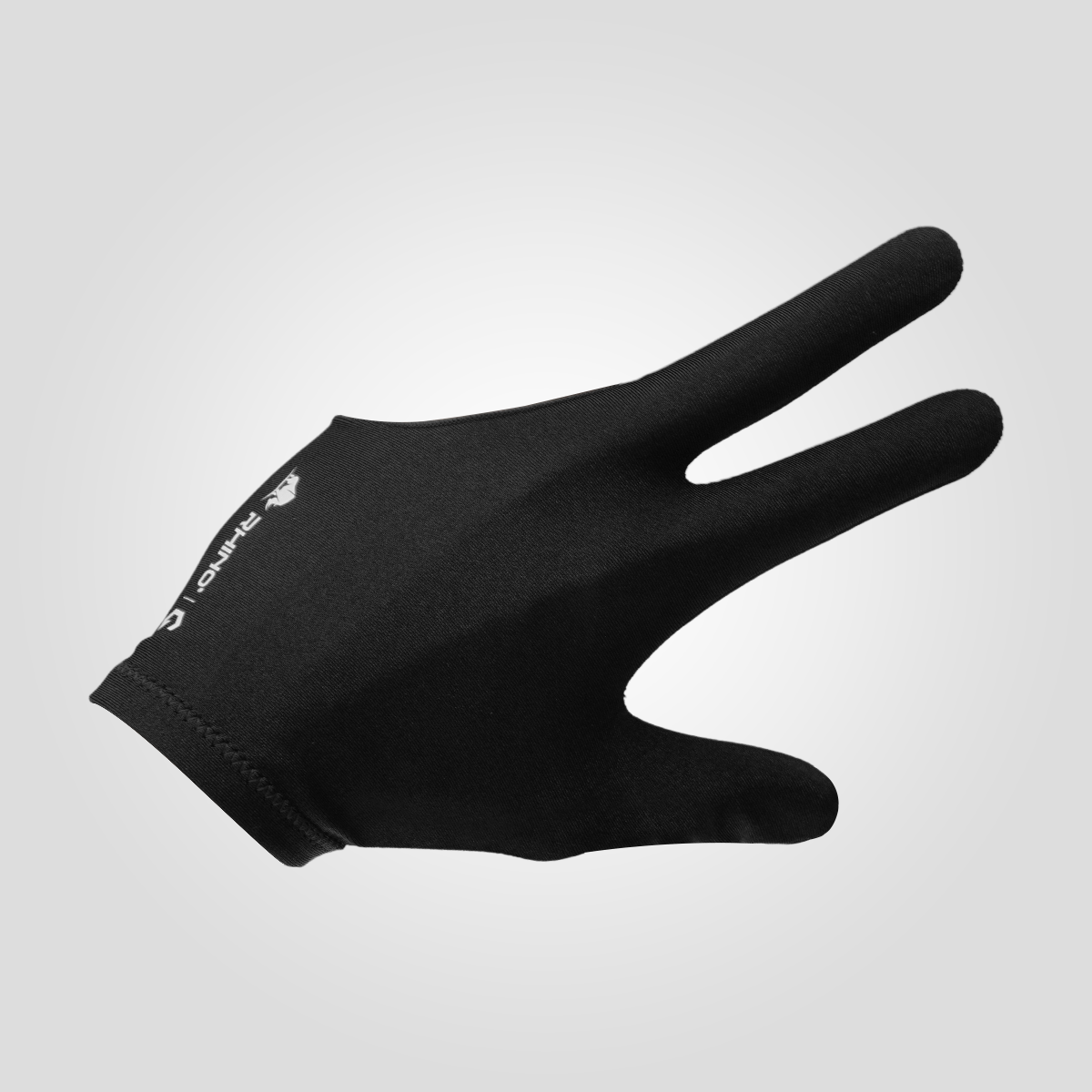
Billiard Glove: Optional but useful. The Rhino G Billiard Glove works for both hands and provides a smooth, consistent bridge surface regardless of humidity.
Cleaning Cloth: The Rhino Microfiber Billiard Towel removes chalk buildup and skin oils from your shaft after every session, extending shaft life significantly.
Weight Adjustment: The Rhino Weight Bolt Kit lets you fine-tune your cue weight once you know your preferences.
How to Get the Most from Your New Cue
Establish a pre-shot routine: Chalk before every shot. Walk the table to assess from multiple angles. Address the ball the same way every time. Consistent routines build muscle memory.
Practice one skill at a time: Spend a week on stop shots, then draw, then follow, then English. Focused practice with a consistent cue builds a solid foundation faster than scattered practice.
Play with better players: Nothing accelerates improvement like competing against players who are better than you. The billiards community is generally welcoming to enthusiastic beginners.
Frequently Asked Questions for First-Time Buyers
How much should I spend on my first pool cue?
Spend $150-350 for a quality first cue that will last years and not limit your development. Cues under $100 tend to have quality issues that create bad habits. Cues over $400 offer diminishing returns while fundamentals are still developing.
Should I buy one cue or a full set?
Start with a single playing cue. Once you are playing regularly and understand your game, add a dedicated break cue. Jump cues are specialized tools most beginners will not need for years.
Can a better cue improve my game?
Yes — by removing equipment variability as a factor. A better cue does not compensate for poor technique, but it provides more accurate feedback. Misses are clearly technique errors rather than equipment issues. This feedback loop accelerates skill development.
Where should I store my new cue?
Store vertically in a case in a climate-controlled room. Avoid hot cars, horizontal storage against walls, or rooms with significant humidity variation. Wood cues especially benefit from consistent storage conditions. Carbon fiber cues like the Nebula 2 are completely immune to these concerns.
What is the difference between a playing cue and a break cue?
Playing cues are optimized for control, English, and soft touch — everything except breaking. Break cues are heavier, stiffer, with harder tips designed to withstand repeated high-impact breaks. The Rhino VOYAGER USA Break Cue and the Rhino KOMET II Break Cue are purpose-built break tools.
Your First Cue: Making the Decision
Simplified recommendations by beginner profile:
- Best modern technology first cue: Nebula 2 Pool Cue — carbon fiber consistency that grows with your game
- Best traditional wood first cue: Rhino VOYAGER USA Pool Cue — American-assembled quality at an approachable price
- Best exotic wood first cue: Rhino RETRO Thuya or Cocobolo Wrapless — heirloom quality you will still play with in a decade
Do not let analysis paralysis stop you from making the leap. Any of these choices will transform your game compared to house cues. Browse the full selection at Arjumany’s pool cue collection and take your game to the next level.